
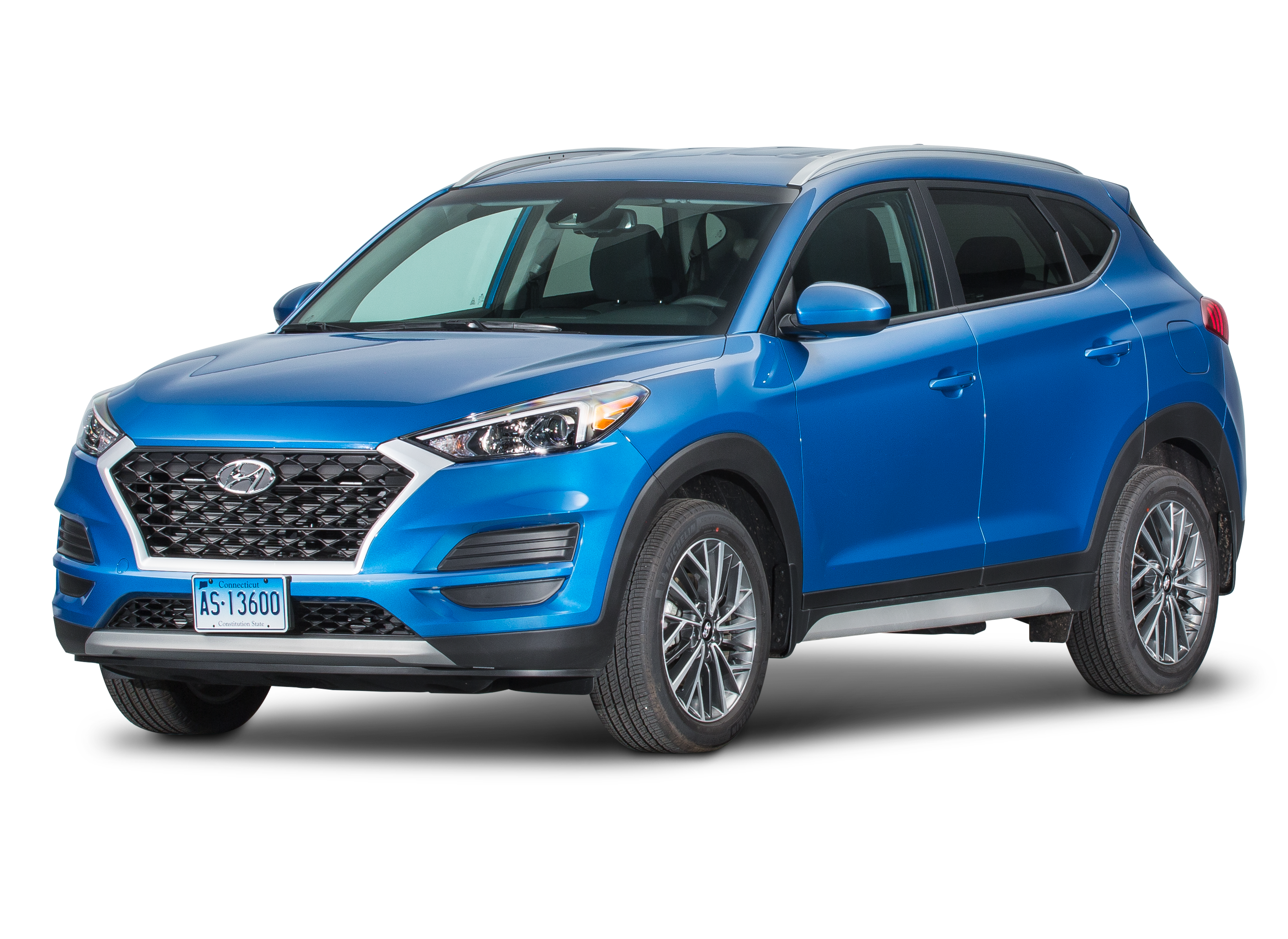
2021 Hyundai Tucson
The redesigned-for-2016 Tucson shares only its name with the previous generation. Now it's more inline with the larger Santa Fe Sport and Santa Fe SUVs. The overall package is more competitive against the segment leaders. The base version has a 2.0-liter four-cylinder engine, linked to a six-speed automatic. This version is rather slow and returned 24 mpg overall. More expensive trims get a 1.6-liter turbo four-cylinder that uses a seven-speed automated manual transmission. This quieter and quicker setup returned 26 mpg overall, but it suffers from a vibration at very low speed, such as in parking maneuvers. Otherwise, ride comfort is pliant and composed, handling is responsive and secure, and the cabin is quiet. Controls are easy to use, and the rear seat is roomy. The Tucson has available lane departure warning, blind-spot warning, and forward collision warning with automatic emergency braking. A new 181-hp, 2.4-liter four-cylinder engine mated to a six-speed automatic arrived in 2018. In our tests, it was faster than the 2.0-liter but returned only 22 mpg overall. The Tucson got a freshening for 2019 which included replacing the previous top-level engine choice (1.6-liter turbo mated to a clunky seven-speed dual-clutch automatic transmission) with a 2.4-liter and a regular automatic. A few interior touches, such as an electronic parking brake, were introduced as well.
Fuel Type
Conventional
Transmission
Automatic
Model Year
2021
Key Features
Model Information
Hyundai Tucson
2021 Model Year
💰Pricing Information
Current Retail Value
$17,525
Retail Value Range
Trade-In Value Range
Ratings & Reviews
Owner Satisfaction
Vehicle Overview
Key information at a glance
Fuel Economy
23 MPG
Combined
Expert Rating
Under evaluation
Price Range
$15,675 - $20,350
Market Value
Technical Specifications
Detailed technical information about this vehicle
Fuel Economy
Dimensions & Weight
Seating & Interior
Environmental Impact
Consumer Reports Test Results
Real-world performance testing data
Performance Testing
Real-World Fuel Economy
Test Summary
Test Status
Test results are based on Consumer Reports' standardized testing procedures under controlled conditions.
Interested in this 2021 Hyundai Tucson?
Get personalized pricing information and connect with authorized dealers in your area.
Starting from
$23,700
Up to
$33,450
* Pricing may vary by location, options, and dealer. Contact dealers for final pricing.