
Review and specifications
2024 Mitsubishi Eclipse Cross
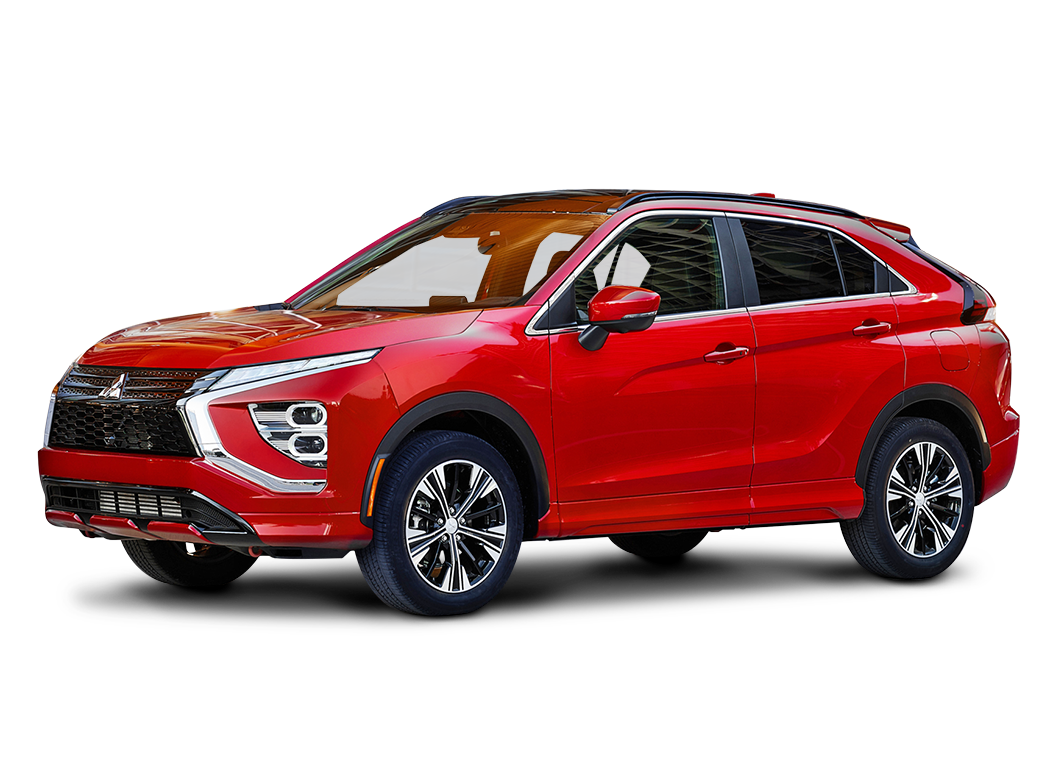
The Mitsubishi Eclipse Cross slots between the Outlander Sport and Outlander SUVs, and is distinguished by its coupe-like styling. This newcomer is underwhelming with mundane handling, an unsettled ride, and extremely frustrating controls. Its power comes from a lackluster 1.5-liter, turbocharged four-cylinder engine mated to a continuously variable transmission. The Eclipse moves decently around town, but it runs out of steam climbing hills or merging onto highways. Its fuel economy of 24 mpg overall isn’t impressive for the class, either. A center console touchpad interacts with the infotainment screen, but this controller is very cumbersome and distracting to use. The driver’s seat is short on support, but getting in or out is easy, and the rear seat room is generous. The curvy styling hurts the driver’s view out. AWD is standard on all but the base version. Updates for 2020 included forward collision warning with pedestrian detection, automatic emergency braking, and lane departure warning as standard on all but the bottom two trims. A freshening for the 2022 model year brings standard forward collision warning, automatic emergency braking with pedestrian detection and lane departure warning on all trims. Front-wheel drive is now available on all versions. It also brings a new infotainment system that's much easier to use. For 2023, all-wheel drive and LED headlights became standard on all trims. 2024 added more standard equipment to the SE trim, such as adaptive cruise control and a leather wrapped steering wheel. The 2025 Eclipse Cross received a standard Rear Seat Alert system. On SE trims, an available updated Black Edition now offers revised front lip and rear spoiler.
- Market value
- $19,600
- Fuel
- Conventional
- Transmission
- Automatic
- Seats
- 5
At a glance
Model data
Overview
- Powertrain
- Conventional
- Body style
- 4-door SUV
- Drive type
- AWD
- Transmission
- CVT
- Category
- Subcompact SUVs
- Generation began
- 2018
Pricing
- Current retail median
- $19,600
- Retail value range
- $17,275 - $19,850
- Original MSRP range
- $26,345 - $31,145
- Trade-in range
- $15,795 - $18,595
Ratings
- Road test score
- 65/100
Fuel economy
- EPA city
- 25 MPG
- EPA highway
- 28 MPG
- EPA combined
- 26 MPG
- Tested city
- 17 MPG
- Tested highway
- 31 MPG
- Tested overall
- 24 MPG
- Annual fuel cost
- $1,630
- Cruising range
- 380 miles
Road tests
- 0-30 mph
- 3.6 sec
- 0-60 mph
- 9.9 sec
- 60-0 mph braking
- 132 ft
- Avoidance speed
- 52.5 mph
- Test status
- Test Completed
Dimensions
- Length
- 179 in
- Width
- 71 in
- Height
- 67 in
- Wheelbase
- 105 in
- Weight
- 3,515 lb
- Maximum load
- 825 lb
- Towing capacity
- 1,500 lb
Interior
- Seating
- 5 people
- Front head room
- 4.5 in
- Front leg room
- 41 in
- Rear head room
- 2.5 in
- Rear leg room
- 29 in
- Cargo volume
- 22.5 cu ft
Environmental impact
- Air pollution score
- 5/10
- Greenhouse gas score
- 5/10
- SmartWay
- No
Brand context
About Mitsubishi
<p>Mitsubishi sells a small range of subcompact and compact SUVs; none stand out among their rivals. In the past, Mitsubishi was known for its partnership with Chrysler and its eclectic lineup. Discontinued models include budget-friendly Mirage, sports cars such as the 3000 GT, Eclipse, and Lancer Evolution, mid-priced sedans, and dedicated off-road SUVs. After struggling during the 2000s and 2010s, Mitsubishi is now a partner in the Renault-Nissan-Mitsubishi Alliance and has benefited from access to the other alliance members’ designs and technology. The Mitsubishi Outlander, for example, is based on the Nissan Rogue.</p>
Vehicle ID: 28075 First published: November 29, 2023 Updated: June 4, 2026
Values may vary by trim, options, location, and market conditions.
Keep comparing
Related vehicles
$20,650
$17,700
$14,538
$22,063
$18,800
$20,250