
Review and specifications
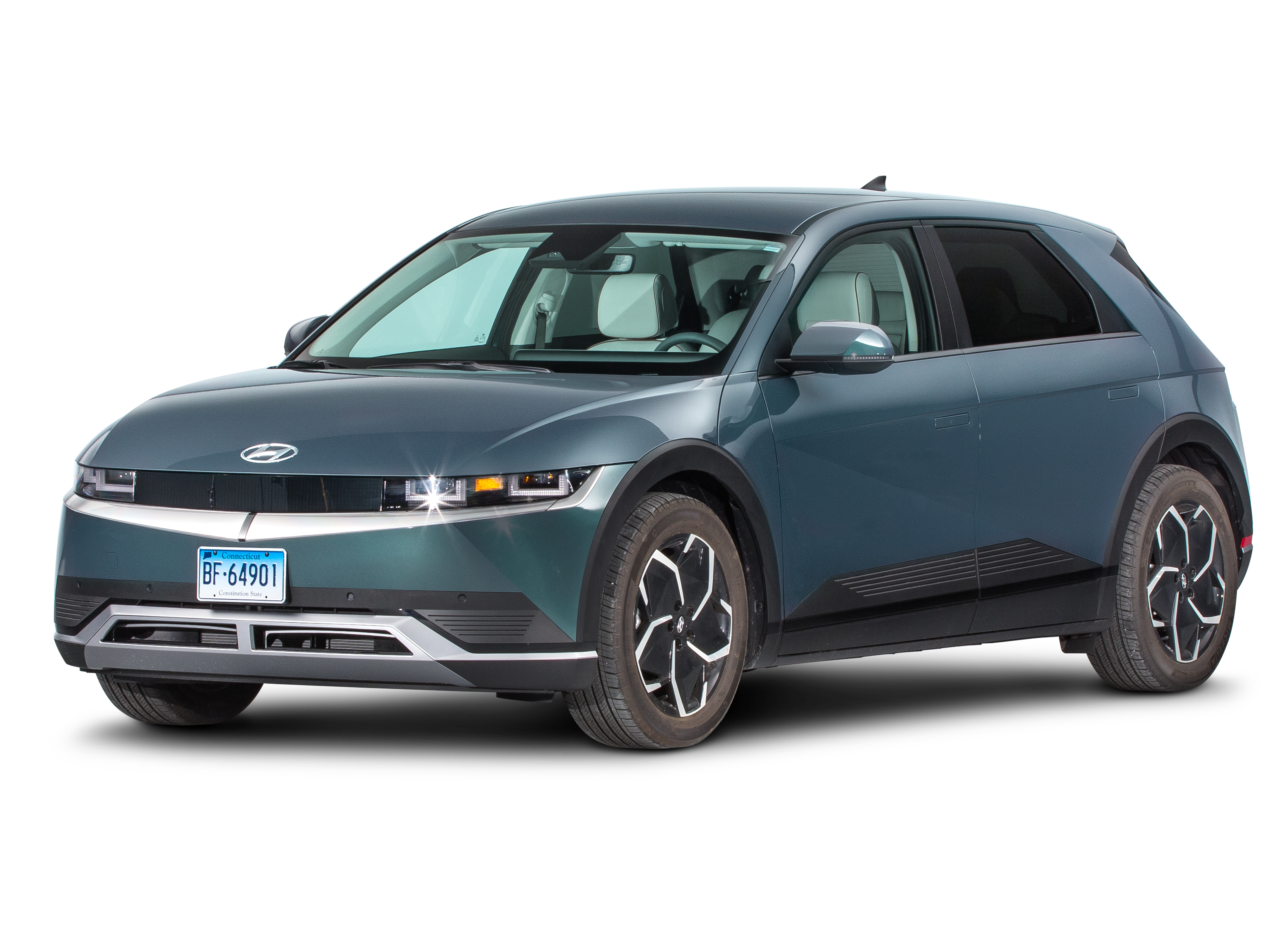
2022 Hyundai Ioniq 5
Don't confuse the Ioniq 5 with the regular Ioniq. The new Ioniq 5 is an electric vehicle from the ground up that has Tesla in its gunsight. It's a tall hatchback that's sized similarly to the automaker's Tucson SUV. The maximum range is estimated to be about 300 miles with the 77.4 kWh battery and a single motor rear-wheel drive version, and about 269 miles for the dual motor all-wheel-drive. Charging times can be quick in DC-fast public charging venues thanks to 400- and 800-volt capability. In these scenarios the battery can be charged up from 10 percent to 80 percent in just 18 minutes, says Hyundai. Many elements within the car--such as seats, headliner, door trim, and flooring, use eco-friendly materials. The car is wide and the long wheelbase and flat floor endow the cabin with lots of interior space. The Ioniq 5 matches the Tesla Model Y and Mustang Mach-E in terms of size and is related to Kia's upcoming EV6. For 2023, All-wheel drive models got an EPA estimated range increase from 256 to 266 miles. 2023 models also received a battery preconditioning feature that prepares the Ioniq 5 for faster charging when the built-in navigation system is used to locate a charger. For 2024, Rear side airbags, rear seatbelt pre tensioners, and steering wheel haptic feedback for LKA and BSW became standard. For 2025, the Ioniq 5 received a refresh bringing several significant feature changes as well as revised front and rear styling. Both RWD and AWD models received larger batteries which Hyundai claims will provide slightly improved range depending on trim and tire size. The Ioniq 5 is now equipped with a NACS charging port as standard, allowing buyers to take advantage of Tesla's Supercharger charging network. The car will come with a CCS adapter so that owners can still charge elsewhere. Inside, the Ioniq 5 gets Hyundai's latest 12.3-inch infotainment system with standard wireless Android Auto and Apple CarPlay as well as a revised center console. The Ioniq 5 also finally sports a rear wiper. Also for the 2025 model year, a new all-wheel drive high-performance N version with 641 hp was introduced, as was a new XRT trim with lifted suspension, all-terrain tires, and added body cladding. On the safety front, forward attention warning (monitored by a camera) is standard. SEL trims and above get a radar rear occupant alert.
- Market value
- $16,688
- Fuel
- Electric
- Transmission
- Automatic
- Seats
- 5
At a glance
Model data
Overview
- Powertrain
- Electric
- Body style
- 4-door SUV
- Drive type
- AWD
- Transmission
- Direct, 1-speed
- Category
- Electric SUVs
- Generation began
- 2022
Pricing
- Current retail median
- $16,688
- Retail value range
- $15,200 - $19,250
- Original MSRP range
- $39,950 - $55,000
- Trade-in range
- $12,860 - $17,875
Ratings
- Road test score
- 86/100
- Owner satisfaction
- 4/5
- Would buy again
- 68%
- Reliability
- 2/5
Fuel economy
- EPA combined
- 98 MPG
- Cruising range
- 255 miles
Road tests
- 0-30 mph
- 1.9 sec
- 0-60 mph
- 4.7 sec
- 60-0 mph braking
- 131 ft
- Avoidance speed
- 53 mph
- Test status
- Test Completed
Dimensions
- Length
- 183 in
- Width
- 74 in
- Height
- 63 in
- Wheelbase
- 118 in
- Weight
- 4,560 lb
- Maximum load
- 860 lb
- Towing capacity
- 2,000 lb
Interior
- Seating
- 5 people
- Front head room
- 6 in
- Front leg room
- 43 in
- Rear head room
- 4 in
- Rear leg room
- 31 in
- Cargo volume
- 28.5 cu ft
- Luggage
- 3+1+0
Owner feedback
- Comfort
- 5/5
- Driving
- 5/5
- Styling
- 5/5
- Value
- 1/5
Environmental impact
- Air pollution score
- 10/10
- Greenhouse gas score
- 10/10
- SmartWay
- Elite
Brand context
About Hyundai
<p>From low-cost sedans to three-row electric SUVs, Hyundai has a model for almost every kind of customer. Most new Hyundai vehicles are stylish, functional, and competitively priced, but the brand overall ranks around the middle in Consumer Reports’ reliability and owner satisfaction ratings. Performance for individual models and years varies widely, with some standouts and a few laggards. The core Hyundai lineup includes low-cost compact Elantra and midsized Sonata sedan. SUVs include the subcompact Kona and compact Tucson, plus the midsized Santa Fe and larger Palisade, both of which offer hybrid powertrains and three-row seating. In our testing, most Hyundai models are available with a hybrid drivetrain, which adds power and smoothness while improving fuel economy. The Ioniq electric models are high-tech, well-designed, and can charge quite rapidly at public DC fast charging stations.</p>
Vehicle ID: 21784 First published: February 23, 2021 Updated: June 4, 2026
Values may vary by trim, options, location, and market conditions.
Keep comparing
Related vehicles
2023
Hyundai Ioniq 5
$19,125
2024
Hyundai Ioniq 5
$22,838
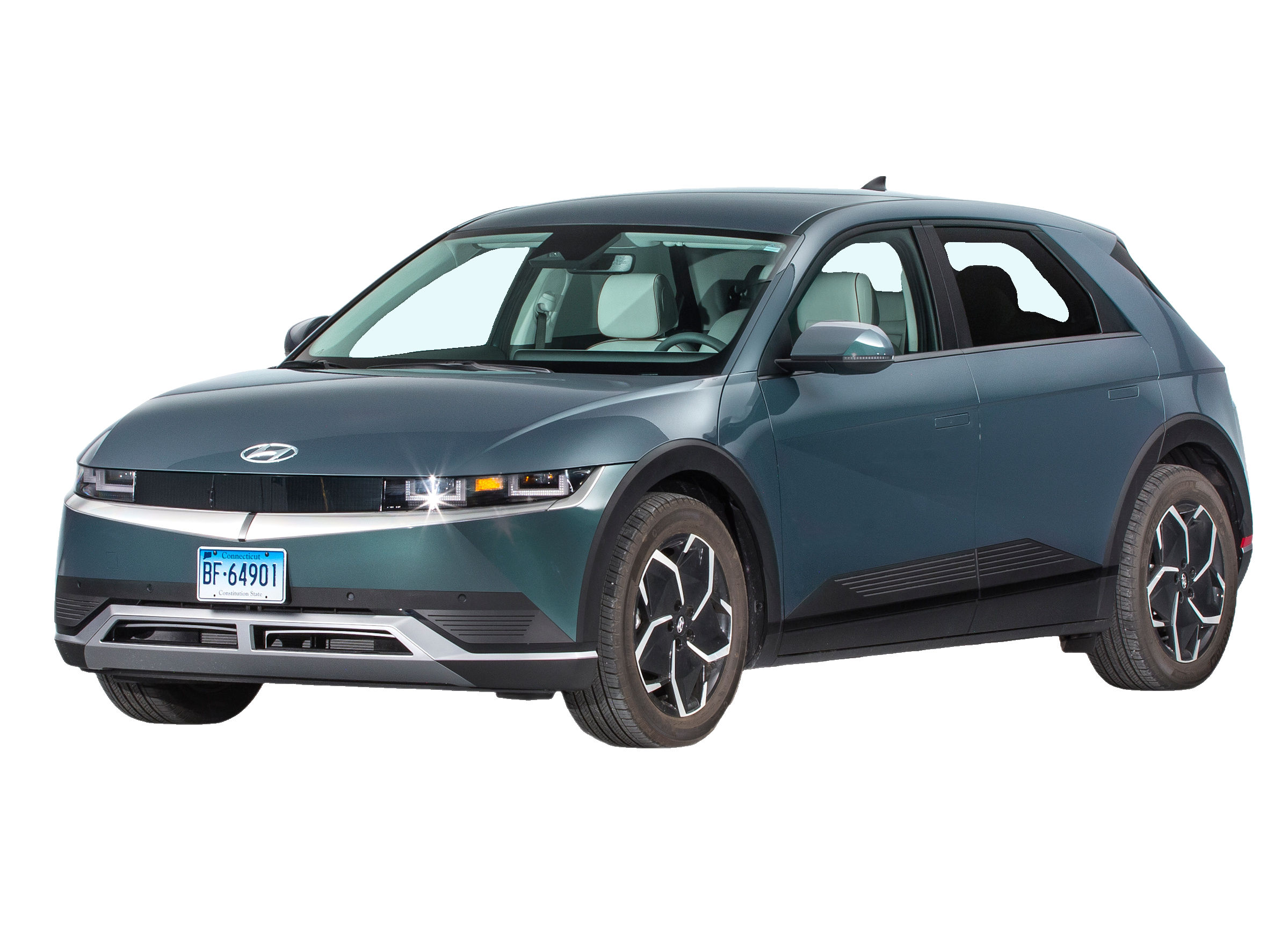
2025
Hyundai Ioniq 5
$28,800
2026
Hyundai Ioniq 5
$32,888
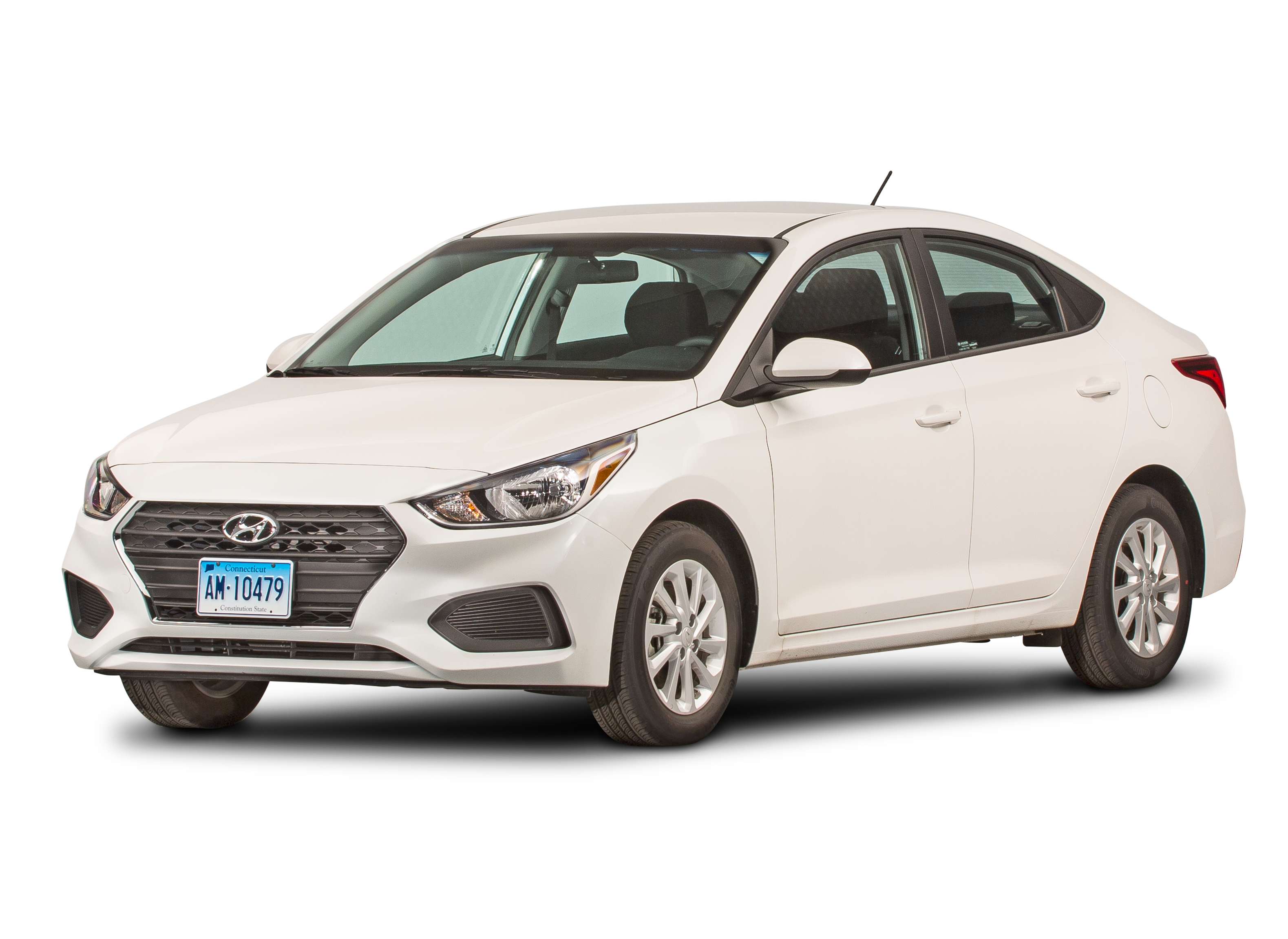
2022
Hyundai Accent
$13,500
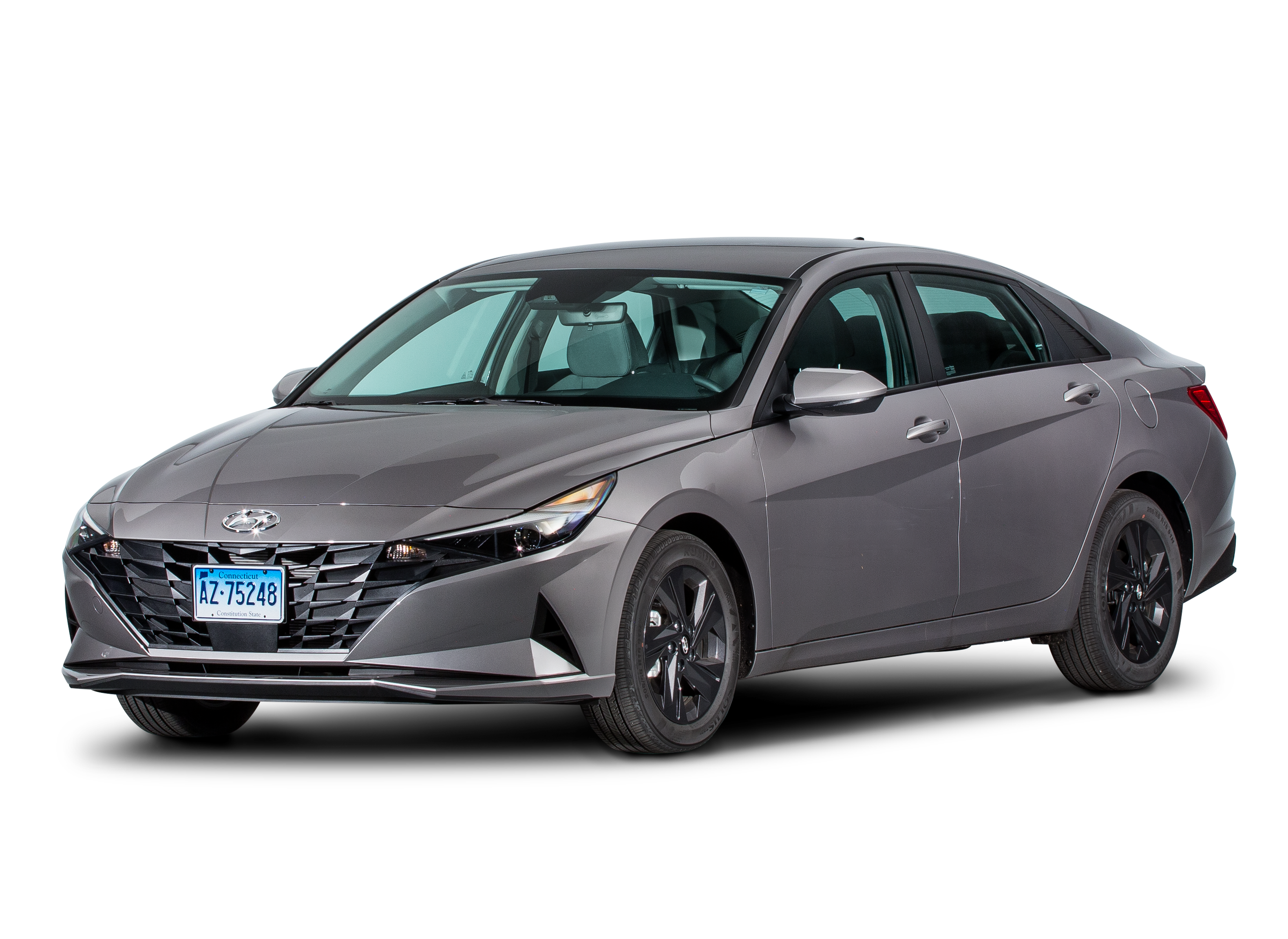
2022
Hyundai Elantra
$17,025